Saket-ap-Eito: The Transfer of Generations
One of the most important ceremonies in Kipsigis governance, where responsibility for leadership, protection, and service passed from one generation to another.
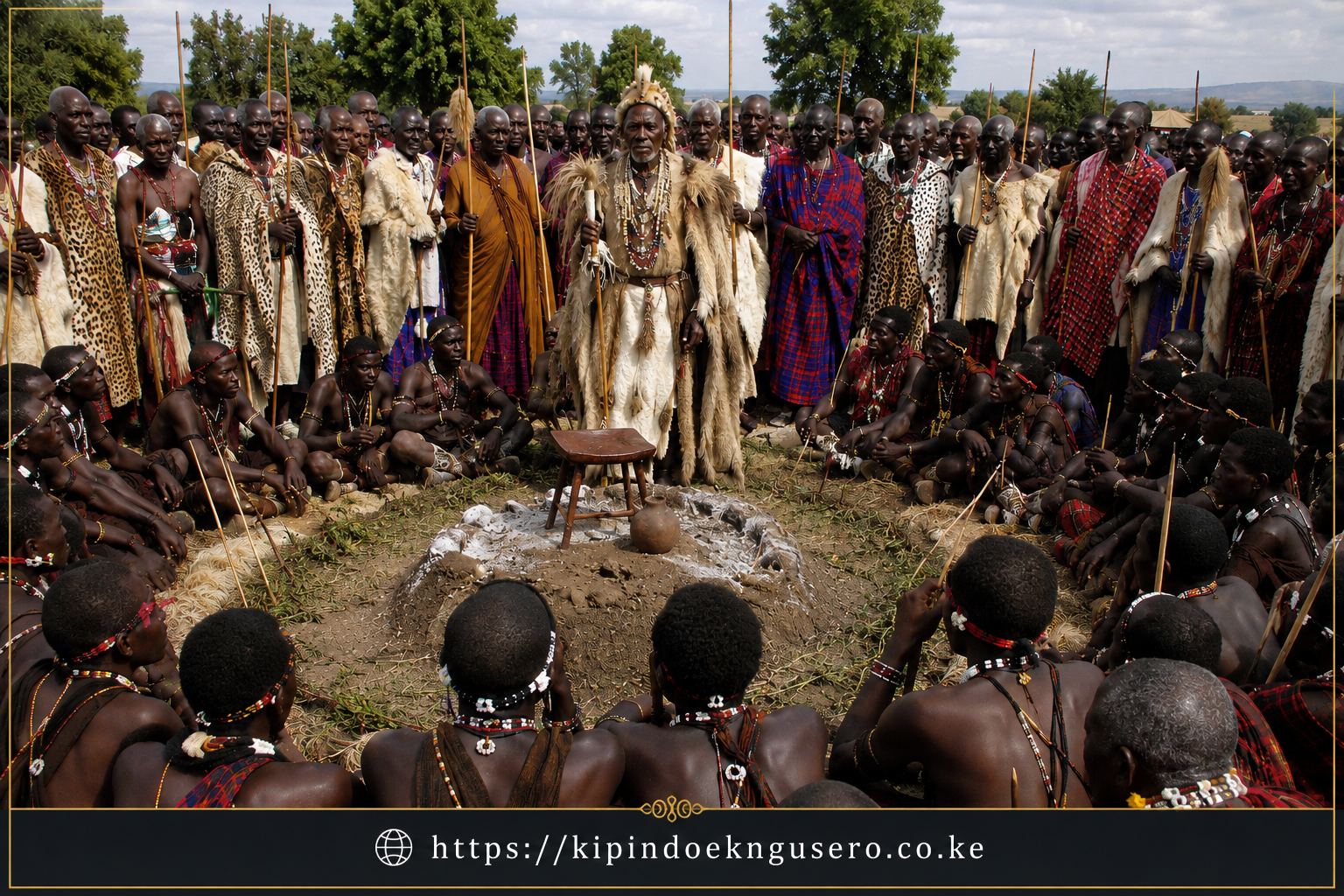
Among the Kipsigis and related Kalenjin communities, few ceremonies carried as much dignity, symbolism, and national importance as Saket-ap-Eito.
This was not merely a ritual gathering. It was the solemn ceremony through which leadership, protection, and responsibility for the country passed from one generation of warriors to another.
A Ceremony of National Importance
Traditionally, this ceremony occurred approximately every seven to eight years, usually around four years after a major initiation cycle.
It marked the formal moment when one age-set surrendered responsibility for defending the land and another accepted the sacred duty of protecting the people.
This was not symbolic theatre—it was governance, cultural continuity, and military transition.
The Gathering of Men
On the appointed day, men from across the land gathered at a designated ceremonial site. The atmosphere was solemn, charged with anticipation and cultural dignity.
Participation followed strict rules:
- Adult men attended where possible.
- The Orkoiyot had to be present.
- Married warriors were forbidden from attending.
- Married warriors and their wives remained in seclusion.
These restrictions emphasized the sacred seriousness of the occasion.
The White Bull Ceremony
The ceremony opened with the sacrifice of a white bull, purchased by the young warriors.
White symbolized purity, sacred transition, and solemn blessing.
After slaughter:
- The meat was eaten by elders.
- The hide was carefully used for symbolic rites.
Each young warrior cut a small ring from the hide and placed it on one finger of the right hand as a visible sign of commitment, readiness, and duty.
The Circle of Authority
A dramatic ceremonial circle then formed around the Orkoiyot.
Nearby stood a ceremonial stool surrounded by:
- Cow dung
- Fruit of the sacred Lapotuet shrub
These objects symbolized continuity, fertility, blessing, prosperity, and the bond between the people, livestock, and land.
The Great Handing Over
Then came the defining moment.
The outgoing generation stood before the assembly and removed their warrior garments, dressing instead in elders' attire.
This act symbolized:
- The end of warrior service
- Transition into elderhood
- Transfer of active national responsibility
The Charge to the New Warriors
The younger warriors sat before the assembly awaiting their charge.
They were solemnly entrusted with the safety of the people and the future of the nation.
Guard the land of your fathers.
Protect the people.
Carry the safety of the country in your hands.
This was their commissioning into responsibility, leadership, and service.
A Ceremony of Leadership, Not Just Ritual
Saket-ap-Eito was a practical transfer of governance.
It reinforced:
- National defense responsibility
- Age-set governance
- Generational succession
- Respect for elders
- Continuity of cultural leadership
Legacy
Though modern governance has replaced traditional age-set administration, Saket-ap-Eito remains one of the most sophisticated examples of indigenous African governance systems.
It reveals a society that organized leadership, succession, duty, and national identity with remarkable discipline and wisdom.