Traditional Kipsigis Marriage (Keeseet)
Exploring one of the richest expressions of family values, cultural continuity, and communal unity in Kipsigis society.
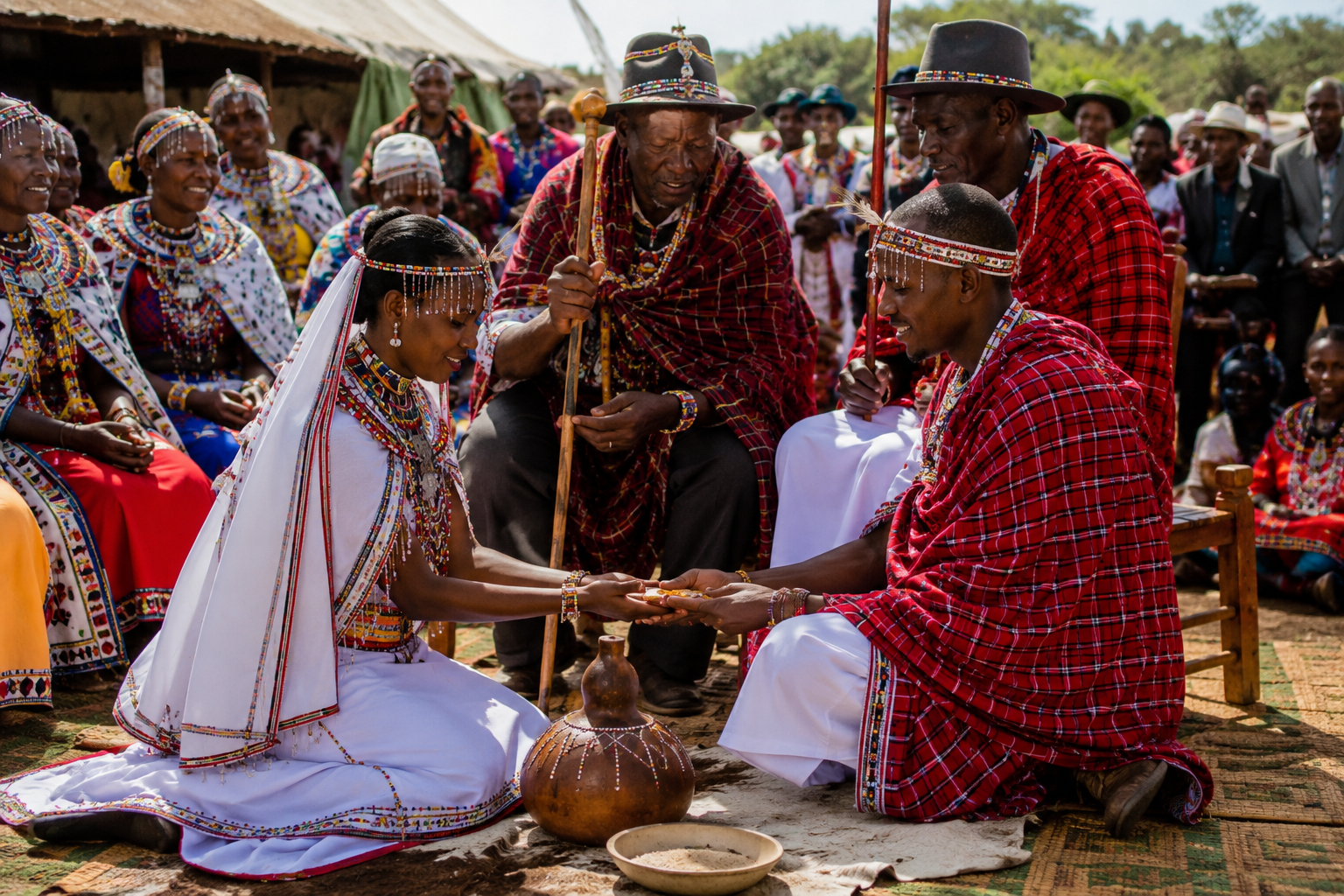
Among the Kipsigis, marriage was not simply the union of a man and a woman. It was a sacred cultural institution that united families, clans, ancestors, and future generations. Marriage symbolized continuity, responsibility, social harmony, and preservation of lineage.
Marriage as a Community Institution
Traditional marriage was never viewed as a purely private matter. Families, elders, and clan representatives played important roles in guiding, approving, and blessing the union.
Important considerations included:
- Clan compatibility
- Family reputation
- Moral character
- Lineage relationships
- Cultural appropriateness
The Traditional Marriage Journey (Keeseet)
The marriage process unfolded through several structured ceremonial stages.
1. Yaet-ap Kooito (Initial Marriage Proposal)
The journey began when the father of the young man formally visited the girl's family to express interest.
- He wore ceremonial attire
- Visited the family altar (Mabwaita)
- Placed a ceremonial stick (Noogirweet)
- Signaled peaceful intention and marriage interest
2. Kebendii Kooita (Formal Family Introduction)
A formal visit followed where gifts such as livestock could be presented.
- Clan background checks
- Kinship verification
- Character discussions
- Family suitability review
3. Teet-aap Ko (House Gift Ceremony)
Further ceremonial gifts and family engagement followed. More inquiries were made regarding the groom's character, conduct, and family background.
4. Kaailet-ab-Saanik (Blessing Visit)
The groom, often accompanied by an age mate, visited the bride's family for blessings.
- Acceptance
- Peace
- Blessing
- Goodwill
5. Chutet-aap Njoor
The groom gained formal acceptance into the household's male space.
- Hospitality rituals
- Ceremonial meals
- Recognition by family elders
- Public family acknowledgement
6. Sueet-aap Tuuga (Dowry Negotiations)
Elders negotiated bride wealth respectfully and ceremonially.
- Cattle
- Goats
- Sheep
Dowry symbolized commitment, alliance, appreciation, and social legitimacy.
7. Rateet (Betrothal Confirmation)
This ceremony formally confirmed the union.
- Butter blessing
- Green grass symbolism (Seguutyet)
- Elders' prayers
- Mutual symbolic commitment
The grass symbolized peace, fertility, and enduring unity.
8. Keeseet (Wedding Ceremony)
The wedding ceremony marked the culmination of all marriage preparations.
- Ceremonial arrival of the bride
- Family altar gathering
- Traditional blessings
- Sharing Mursik
- Eating from the same meal
- Public recognition of the union
These rituals symbolized shared life, partnership, and family unity.
Roles in Marriage
- Husband: Leadership, provision, protection, stewardship.
- Wife: Household care, hospitality, continuity, child upbringing.
- Elders: Guidance, blessings, arbitration.
- Families: Support, alliance, and witness.
Recognized Traditional Marriage Types
1. Keeseet
The full traditional marriage process involving family negotiations, ceremonies, blessings, and bride wealth.
2. Syoonik
Polygamous marriage where a man married more than one wife, usually depending on wealth and responsibility.
3. Museet
Marriage arranged on behalf of a son who was absent or unavailable.
4. Kiitunji Toloch
Marriage arrangements intended to preserve lineage continuity.
5. Elopement Marriage
A couple could begin a union without full formal procedures, later followed by family reconciliation.