Traditional Kipsigis Naming Ceremony
Exploring how names preserved ancestry, identity, heritage, and cultural continuity among the Kipsigis people.
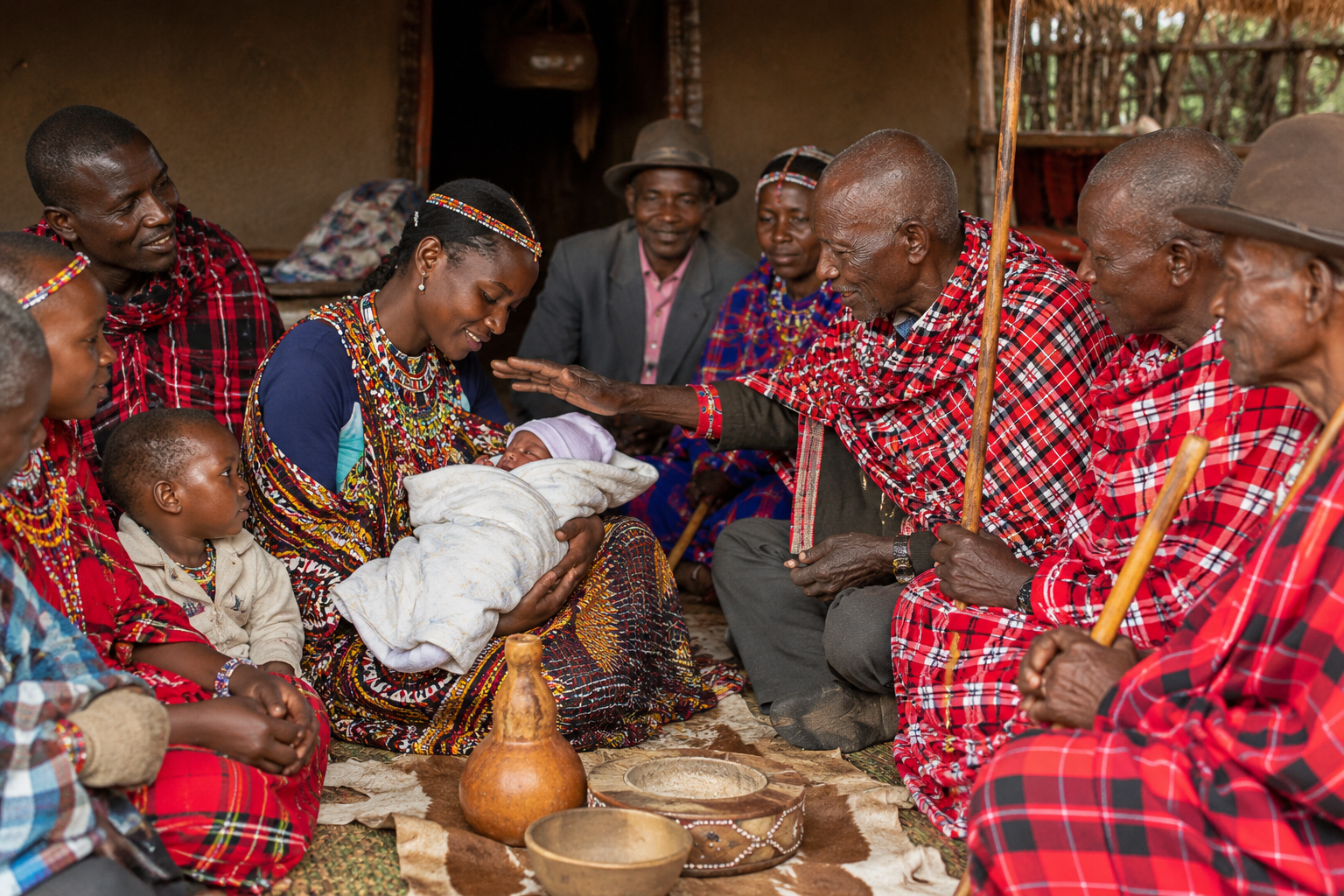
Among the Kipsigis, naming a child was far more than simply assigning an identity. It was a deeply meaningful cultural ceremony connecting the newborn to family, ancestry, environment, history, and community.
The Birth of a Child
Childbirth held great significance in traditional society. The arrival of a child was celebrated as both a blessing and a continuation of family lineage.
- Tumet – Childbirth
- Tamonet – Expectant Mother
- Saloita – Mother After Childbirth
Birth was viewed as a gift from God and an important event that strengthened family and clan continuity.
Naming Based on Circumstances
Names were often chosen according to the exact circumstances surrounding the child's birth.
Examples included:
- Time of Birth – Kipkoech, Kiplangat, Chebet
- Events Happening – Kiptoo (visitors present)
- Weather Conditions – Kiprop (rain)
- Place of Birth – Kipchoge (near granary)
- Birth Circumstances – Kipchirchir (emergency birth)
In this way, names preserved personal birth history and connected individuals to memorable events.
Ancestral Naming (Kurenet)
One of the most sacred naming traditions involved naming children after departed ancestors, a practice known as Kurenet.
It was believed that the memory and virtues of an ancestor could continue symbolically through the newborn child.
Elders or senior women would mention the names of departed relatives while observing the child's reactions until a name was accepted.
Gender Naming Patterns
Traditional naming often reflected clear gender patterns.
- Kip- commonly for boys
- Chep- commonly for girls
- Jep- among some related communities
These prefixes immediately identified cultural background and community affiliation.
Naming and Community Identity
A child's name linked them to:
- Clan heritage
- Family ancestry
- Social belonging
- Historical memory
- Cultural identity
Names were never random. Every name carried meaning and often told a story about the child's origins.
Names Across Life Stages
A traditional Kipsigis individual might receive different names or identities throughout life.
- Birth Name
- Initiation Identity
- Adult Social Identity
- Marriage-related Naming Associations
These changes reflected personal growth, maturity, and evolving responsibilities within the community.